Buy fitnessbikes.eu ?
We are moving the project
fitnessbikes.eu .
Are you interested in purchasing the domain
fitnessbikes.eu ?
domain@kv-gmbh.de · 0541-91531010
Buy fitnessbikes.eu ?
What is the topic of the French exam: Futur composé and Futur simple?
The topic of the French exam on Futur composé and Futur simple is the future tense in French. Students will be tested on their ability to conjugate verbs in both the futur composé (compound future) and futur simple (simple future) tenses. They will need to demonstrate their understanding of when to use each tense and how to form the correct verb endings. The exam may also include exercises that require students to write sentences or paragraphs using verbs in the future tense. **
What is the topic of the French class test: Futur composé and Futur simple?
The topic of the French class test on Futur composé and Futur simple is the future tense in French. Students will be tested on their ability to conjugate verbs in both the Futur composé (compound future) and Futur simple (simple future) tenses. They will need to demonstrate their understanding of when to use each tense and how to form the correct verb endings. The test may also include exercises to practice using these tenses in context. **


Similar search terms for Futur I
Top-Angebote
Products related to Futur I:
-
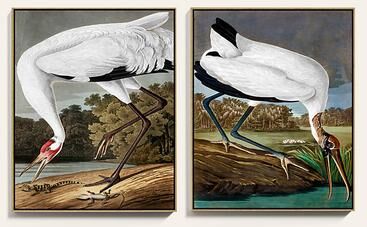
"Waterbird Art I & II - Print I, 43"" x 33"" - Ballard Designs""John James Audubon became America's foremost ornithologist and wildlife artist of the 19th century. Audubon's seminal ""The Birds of America"" containing 435 life-size prints created from his own dramatic bird portraits took continental Europe by..."719,20 $*Shipping: 86,30 $Secure redirect to the provider
-
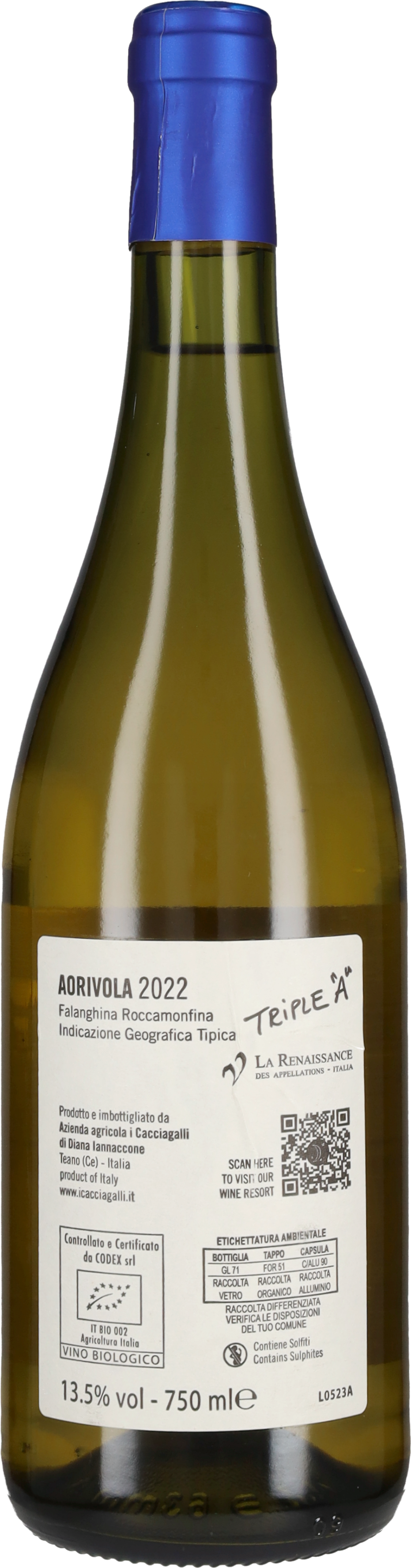
'Aorivola' I Cacciagalli 2023The Aorivola I Cacciagalli is undoubtedly one of the best Italian Falanghinas, a genuine and credible interpretation of the well-known grape variety. When talking about Falanghina, one sadly thinks of the standardized offerings found in bars for aperitifs, where the famous Campanian wine is always present but often discredited by insignificant and mediocre samples. This is certainly not the case for the one vinified by Diana and Marco, founders of the I Cacciagalli winery and guardians of a splendid terroir like that of Sannio Beneventano, where besides the aforementioned white grape variety, Aglianico, Pallagrello Nero, Piedirosso, and Fiano also thrive, cultivated without any chemical or synthetic substances that could deprive them of their energy. The intent is precisely to return the territory, and the bottles from Marco and Diana often speak to us directly yet austerely, requiring a bit of patience to approach. The (minimal) wait generously rewards, revealing deep and vital liquids, which can also be purchased at a very advantageous price. Absolute certainty. The Aorivola is produced with pure Falanghina grapes, cultivated in volcanic soils in Sannio Beneventano with extremely limited yields. In the vineyard, as already mentioned, the principles of biodynamics are followed, while in the winery, alcoholic fermentation occurs spontaneously, and in the case of Aorivola, the liquid is left in contact with the skins for 12 hours. Aging in steel containers and bottling without the liquid undergoing clarification or filtration. The Aorivola wine warms the glass with its golden and bright yellow hues. The nose has great intensity and richness, with hints of ripe peach, citrus peel, and white flowers, all expressed with elegance. The sip is filling and caressing but never complacent, constantly enlivened by a saline vein that continuously lifts it. Iconic in its type.Falanghina in purity, cultivated on volcanic soils in the Sannio Beneventano with extremely limited yields. In the vineyard, as previously mentioned, the principles of biodynamics are followed, while in the winery, the alcoholic fermentation occurs spontaneously, and in the case of Aorivola, the liquid is left in contact with the skins for 12 hours. Aging in steel containers and bottling without the liquid undergoing clarification or filtration. The wine Aorivola warms the glass with its bright golden yellow hues. The nose has great intensity and richness, with hints of ripe peach, citrus zest, and white flowers, all elegantly expressed. The sip is filling and caressing but never complacent, constantly enlivened by a saline vein that continuously lifts it. Iconic in its type.16,00 £*Shipping: 48,00 £Secure redirect to the provider
-
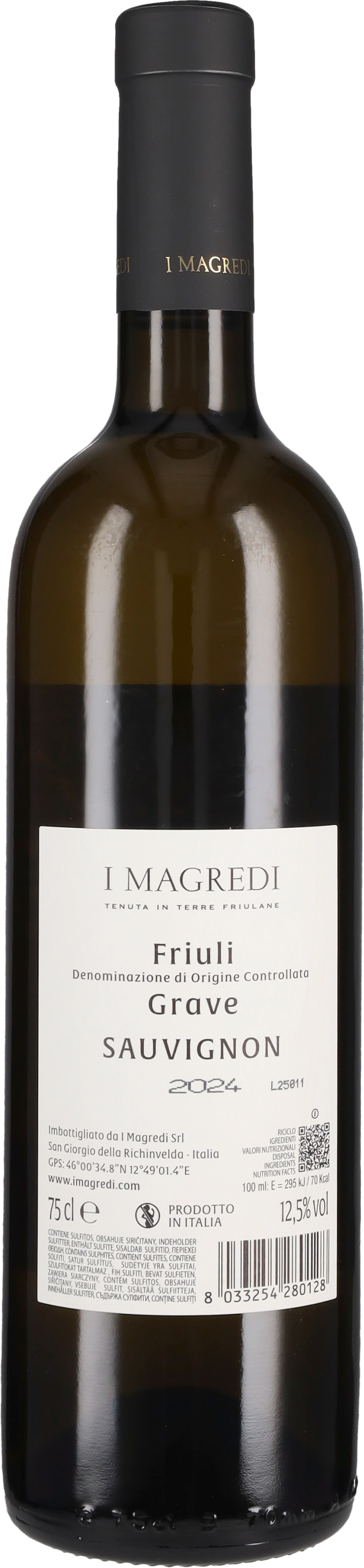
I Sistri' Felsina 2024this period, bottling operations are carried out. The wine “I Sistri” by Felsina presents itself to the eye with a particularly rich and concentrated straw yellow color. The fruit, with an exotic connotation, presents itself to the nose first, then enriched by more smoky hints and references to sweet spices. On the palate, it is full-bodied, round, and precise in presenting a warm sip that envelops the palate thanks to a very harmonious fresh and savory vein. A label whose story began in the 1980s, following a careful research work on the variety carried out by the winery's ownership.this period, bottling operations are carried out. The wine “I Sistri” by Felsina presents itself to the eye with a particularly rich and concentrated straw yellow color. The fruit, with an exotic connotation, presents itself to the nose first, then enriched by more smoky hints and references to sweet spices. On the palate, it is full-bodied, round, and precise in presenting a warm sip that envelops the palate thanks to a very harmonious fresh and savory vein. A label whose story began in the 1980s, following a careful research work on the variety carried out by the winery's ownership.20,00 £*Shipping: 48,00 £Secure redirect to the provider

-
What is the difference between PFA, ESSE, and Futur I?
PFA (Präteritum mit Füllverb) is a German verb tense used to express past actions that are completed and have no connection to the present. ESSE (Essential Sentence Structure Elements) is a linguistic theory that focuses on the basic elements necessary for constructing sentences in any language. Futur I is a German verb tense used to express future actions or events that will happen at a specific time. Each of these concepts serves a different purpose in language learning and understanding. **
-
What is the context of the French Futur Simple?
The French Futur Simple tense is used to express actions that will happen in the future. It is often used to make predictions, express intentions, or talk about future events. The Futur Simple is formed by adding specific endings to the infinitive form of the verb, and it is used in both spoken and written French. It is an important tense for expressing future actions and plans in the French language. **
-
What is the translation of Futur 2 or Konjunktiv Perfekt?
The Futur 2 or Konjunktiv Perfekt in German is a verb form used to express hypothetical or future actions that have already been completed. It is formed by using the auxiliary verb "haben" or "sein" in the Konjunktiv II (subjunctive II) form, followed by the past participle of the main verb. This tense is often used in reported speech, conditional sentences, or to express wishes and desires. For example, "Er hätte das Buch gelesen" translates to "He would have read the book" in English. **
-
How do you form the futur composé with reflexive verbs?
To form the futur composé with reflexive verbs, you first conjugate the auxiliary verb "avoir" or "être" in the future tense, depending on the reflexive verb. Then, you add the past participle of the reflexive verb. For example, with the reflexive verb "se laver" (to wash oneself), you would conjugate "se laver" in the future tense, such as "je me laverai" (I will wash myself). **


Can you please correct a French text in the Futur Simple?
Yes, I can help correct a French text in the Futur Simple. Please provide the text that needs to be corrected, and I will be happy to review it for you. **
Can you please translate the French text into the Futur Simple?
Sure, I'd be happy to help. Please provide the French text that you would like me to translate into the Futur Simple. **
Top-Angebote
Products related to Futur I:
-
Merlot 'I Klivi' I Clivi 2023I Clivi has been cultivating and vinifying Merlot for a long time, but the idea of creating a label dedicated to the pure varietal is a truly recent story: the first vintage released corresponds to the 2020 harvest. It is a varietal of undeniable charm and high traditions, which Mario Zanusso wants to interpret according to the original French philosophy of subtraction winemaking: elegance is a matter of simplicity and simplicity is a quest to be pursued with precision, in the work in the vineyard as well as in the cellar operations. The grapes for the production of Merlot come from a vineyard that I Clivi has cultivated for a long family tradition, composed of a heritage of old vines that have reached 80 years of age. Positioned above a clay island, it finds a compact limestone rock base at a depth of one and a half meters: a combination that is precisely reflected in some characteristics of the wine, such as salinity and freshness. The plot is located near the winery, in the area of the village of Corno di Rosazzo, in the province of Udine: the landscape is represented by the gentle slopes of the Eastern Hills of Friuli, just a handful of kilometers from the Slovenian border and just above the province of Gorizia and Collio. The agronomic management is based on the guidelines of organic farming, with manual cultivation and harvesting, which lead to low yields of perfectly ripe grapes in the cellar. After gentle pressing, the alcoholic fermentation in stainless steel tanks is conducted by indigenous yeasts only, with simultaneous maceration on the skins, and likewise, malolactic fermentation takes place spontaneously, both at controlled temperature. The aging occurs in oak barriques and lasts for 12 months, followed by bottling free from invasive practices. The Merlot from I Clivi presents an intense ruby color. The aromas are clear and pleasantly changing: introduced by a classic fruity aroma of small forest berries, they are accompanied by a particularly lymphatic vegetal nuance, concluding with a extremely territorial chalky nuance. Also the tasting inspires an idea of levity, supported by a taut freshness that responds to the beautiful fruity softness. An authentic expression of a tactile red of great finesse.18,00 £*Shipping: 48,00 £Secure redirect to the provider
-
DK My Little Box of Emotions 5 Books Collection Box Set(I Feel Angry, I Feel Proud, I Feel Sad, I Feel Happy & How Am I Feeling?)The characters Happiness, Anger, Sadness, and Pride are here to teach your little one how to manage their emotions. Kids come with a full spectrum of emotions, some of which are too big to keep inside. Every child handles their feelings differently. Learning to deal with them is an important part of growing up. This collection of board books teaches kids how to recognise their emotions. This colourful collection of illustrated books covers a range of emotions that small children experience daily. They just might not fully understand their feelings or have the words for them yet. Each book in this series features fun characters that illustrate a specific emotion. Discover the smiling sunshine that represents Happiness and the twinkly star that represents Pride. This set of educational books will help your child understand what different emotions are and that everyone feels this way sometimes. It also encourages emotional development. In I Feel Sad, the little raincloud shows young children that being sad is okay, and how to stop this feeling from getting too big. In I Feel Angry, the little flame tells kids the best way to deal with this big feeling, and what happens in the body when we get angry. The simple text is ideal for reading aloud and makes reading time fun and educational. This set of adorable picture books will help your child with language development, vocabulary building, and talking about their emotions. Let the cute characters help your toddler discover the simple answers to difficult questions about feelings. My Little Guide to Big Emotions This collection of pre-school books is the ideal children's gift and makes a great addition to any bookshelf. This bright box set from DK Books includes five board books: - How Am I Feeling? - I Feel Happy - I Feel Angry - I Feel Sad - I Feel Proud9,99 £*Shipping: 2,99 £Secure redirect to the provider
-
"Waterbird Art I & II - Print I, 43"" x 33"" - Ballard Designs""John James Audubon became America's foremost ornithologist and wildlife artist of the 19th century. Audubon's seminal ""The Birds of America"" containing 435 life-size prints created from his own dramatic bird portraits took continental Europe by..."719,20 $*Shipping: 86,30 $Secure redirect to the provider
-
What is the topic of the French exam: Futur composé and Futur simple?
The topic of the French exam on Futur composé and Futur simple is the future tense in French. Students will be tested on their ability to conjugate verbs in both the futur composé (compound future) and futur simple (simple future) tenses. They will need to demonstrate their understanding of when to use each tense and how to form the correct verb endings. The exam may also include exercises that require students to write sentences or paragraphs using verbs in the future tense. **
-
What is the topic of the French class test: Futur composé and Futur simple?
The topic of the French class test on Futur composé and Futur simple is the future tense in French. Students will be tested on their ability to conjugate verbs in both the Futur composé (compound future) and Futur simple (simple future) tenses. They will need to demonstrate their understanding of when to use each tense and how to form the correct verb endings. The test may also include exercises to practice using these tenses in context. **
-
What is the difference between PFA, ESSE, and Futur I?
PFA (Präteritum mit Füllverb) is a German verb tense used to express past actions that are completed and have no connection to the present. ESSE (Essential Sentence Structure Elements) is a linguistic theory that focuses on the basic elements necessary for constructing sentences in any language. Futur I is a German verb tense used to express future actions or events that will happen at a specific time. Each of these concepts serves a different purpose in language learning and understanding. **
-
What is the context of the French Futur Simple?
The French Futur Simple tense is used to express actions that will happen in the future. It is often used to make predictions, express intentions, or talk about future events. The Futur Simple is formed by adding specific endings to the infinitive form of the verb, and it is used in both spoken and written French. It is an important tense for expressing future actions and plans in the French language. **
Similar search terms for Futur I
-
'Aorivola' I Cacciagalli 2023The Aorivola I Cacciagalli is undoubtedly one of the best Italian Falanghinas, a genuine and credible interpretation of the well-known grape variety. When talking about Falanghina, one sadly thinks of the standardized offerings found in bars for aperitifs, where the famous Campanian wine is always present but often discredited by insignificant and mediocre samples. This is certainly not the case for the one vinified by Diana and Marco, founders of the I Cacciagalli winery and guardians of a splendid terroir like that of Sannio Beneventano, where besides the aforementioned white grape variety, Aglianico, Pallagrello Nero, Piedirosso, and Fiano also thrive, cultivated without any chemical or synthetic substances that could deprive them of their energy. The intent is precisely to return the territory, and the bottles from Marco and Diana often speak to us directly yet austerely, requiring a bit of patience to approach. The (minimal) wait generously rewards, revealing deep and vital liquids, which can also be purchased at a very advantageous price. Absolute certainty. The Aorivola is produced with pure Falanghina grapes, cultivated in volcanic soils in Sannio Beneventano with extremely limited yields. In the vineyard, as already mentioned, the principles of biodynamics are followed, while in the winery, alcoholic fermentation occurs spontaneously, and in the case of Aorivola, the liquid is left in contact with the skins for 12 hours. Aging in steel containers and bottling without the liquid undergoing clarification or filtration. The Aorivola wine warms the glass with its golden and bright yellow hues. The nose has great intensity and richness, with hints of ripe peach, citrus peel, and white flowers, all expressed with elegance. The sip is filling and caressing but never complacent, constantly enlivened by a saline vein that continuously lifts it. Iconic in its type.Falanghina in purity, cultivated on volcanic soils in the Sannio Beneventano with extremely limited yields. In the vineyard, as previously mentioned, the principles of biodynamics are followed, while in the winery, the alcoholic fermentation occurs spontaneously, and in the case of Aorivola, the liquid is left in contact with the skins for 12 hours. Aging in steel containers and bottling without the liquid undergoing clarification or filtration. The wine Aorivola warms the glass with its bright golden yellow hues. The nose has great intensity and richness, with hints of ripe peach, citrus zest, and white flowers, all elegantly expressed. The sip is filling and caressing but never complacent, constantly enlivened by a saline vein that continuously lifts it. Iconic in its type.16,00 £*Shipping: 48,00 £Secure redirect to the provider
-
I Sistri' Felsina 2024this period, bottling operations are carried out. The wine “I Sistri” by Felsina presents itself to the eye with a particularly rich and concentrated straw yellow color. The fruit, with an exotic connotation, presents itself to the nose first, then enriched by more smoky hints and references to sweet spices. On the palate, it is full-bodied, round, and precise in presenting a warm sip that envelops the palate thanks to a very harmonious fresh and savory vein. A label whose story began in the 1980s, following a careful research work on the variety carried out by the winery's ownership.this period, bottling operations are carried out. The wine “I Sistri” by Felsina presents itself to the eye with a particularly rich and concentrated straw yellow color. The fruit, with an exotic connotation, presents itself to the nose first, then enriched by more smoky hints and references to sweet spices. On the palate, it is full-bodied, round, and precise in presenting a warm sip that envelops the palate thanks to a very harmonious fresh and savory vein. A label whose story began in the 1980s, following a careful research work on the variety carried out by the winery's ownership.20,00 £*Shipping: 48,00 £Secure redirect to the provider
-
"Waterbird Art I & II - Print I, 49"" x 39"" - Ballard Designs""John James Audubon became America's foremost ornithologist and wildlife artist of the 19th century. Audubon's seminal ""The Birds of America"" containing 435 life-size prints created from his own dramatic bird portraits took continental Europe by..."903,20 $*Shipping: 108,38 $Secure redirect to the provider
-
"Waterbird Art I & II - Print I, 33"" x 27"" - Ballard Designs""John James Audubon became America's foremost ornithologist and wildlife artist of the 19th century. Audubon's seminal ""The Birds of America"" containing 435 life-size prints created from his own dramatic bird portraits took continental Europe by..."519,20 $*Shipping: 62,30 $Secure redirect to the provider
-
What is the translation of Futur 2 or Konjunktiv Perfekt?
The Futur 2 or Konjunktiv Perfekt in German is a verb form used to express hypothetical or future actions that have already been completed. It is formed by using the auxiliary verb "haben" or "sein" in the Konjunktiv II (subjunctive II) form, followed by the past participle of the main verb. This tense is often used in reported speech, conditional sentences, or to express wishes and desires. For example, "Er hätte das Buch gelesen" translates to "He would have read the book" in English. **
-
How do you form the futur composé with reflexive verbs?
To form the futur composé with reflexive verbs, you first conjugate the auxiliary verb "avoir" or "être" in the future tense, depending on the reflexive verb. Then, you add the past participle of the reflexive verb. For example, with the reflexive verb "se laver" (to wash oneself), you would conjugate "se laver" in the future tense, such as "je me laverai" (I will wash myself). **
-
Can you please correct a French text in the Futur Simple?
Yes, I can help correct a French text in the Futur Simple. Please provide the text that needs to be corrected, and I will be happy to review it for you. **
-
Can you please translate the French text into the Futur Simple?
Sure, I'd be happy to help. Please provide the French text that you would like me to translate into the Futur Simple. **
* All prices are inclusive of VAT and, if applicable, plus shipping costs. The offer information is based on the details provided by the respective shop and is updated through automated processes. Real-time updates do not occur, so deviations can occur in individual cases. ** Note: Parts of this content were created by AI.